- Remove a brood frame from the hive, not a honey or pollen frame, and check for the queen.
- Brush or shake the bees into a bowl and wait about a minute for the older forager bees to fly off. This step will substantially increase the probability that tested bees are infected.
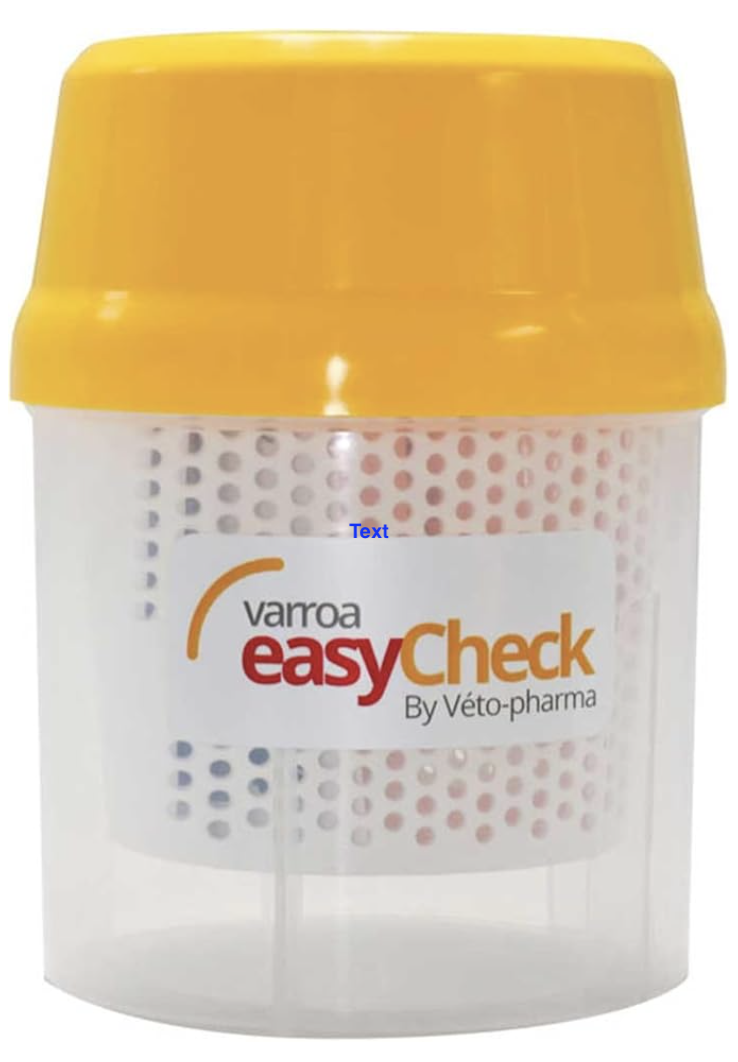
- Place one-half cup (300 bees) into a jar and cover with isopropyl alcohol, methylated spirits or dishwashing liquid.
- Shake vigoriously for one minute to dislodge the mites from the bees. Your arm may get tired so rest after 20 seconds.
- To ensure consistency between tests, or colonies, shake each sample with the same vigor, and for the same amount of time, for each test.
- After shaking, empty liquid into a strainer, with the alcohol falling into a container.
- Add more alcohol to the jar of bees, and vigorously shake again. This increases the accuracy of the test.
- Empty the alcohol into the strainer and let the liquid collect in a container with the previoius liquid.
- It is important that the mesh of the strainer allows any mites to fall through without allowing bees to fall through.
- Count the number of mites in the container.
- Inspect the jar to visualize any mites on the bottom of the jar.
- Since we are estimating the number of traveler (phoretic) mites per 100 bees, if we sampled 300 bees (1/2 cup) and found say, nine mites, the rate of infestation would be 9 per 300 = 3 mites per 100 bees.